
End-to-End Quality Management: LinkedData and Meishuo Build a Digital QMS
Real business challenges drive system development and carry quality requirements across the product lifecycle
Customer: Zhejiang Meishuo Electric Technology Co., Ltd. Solution: QMS 4.0 Quality Management System Project keywords: end-to-end quality management, quality planning, process quality control, cross-system collaboration, quality digitalization
Project overview
For manufacturers, the challenge in quality management is not only to identify nonconformities. It is also to connect customer requirements, product design, process control, and inspection execution so that quality requirements are conveyed accurately, followed consistently, and closed out when problems occur.
This need became increasingly clear as Meishuo worked to optimize its processes and strengthen quality management. Higher expectations for its quality system, data traceability, and business collaboration called for further improvement of existing practices.
LinkedData and Meishuo adopted end-to-end quality management as the guiding approach for their QMS project. The scope covers quality planning, supplier and incoming quality, production process quality, finished-product inspection, quality tools, and integration with related business systems. It addresses immediate inspection needs while also connecting requirements from early planning through downstream execution.
About Meishuo
Zhejiang Meishuo Electric Technology Co., Ltd. is a high-tech company focused on the research, development, production, and sale of electrical control and safety components. It went public in 2023.

Figure 1. Meishuo Technology
Its products include general-purpose, automotive, latching, new-energy, and communication relays, as well as fluid solenoid valves. They are widely used in home appliances, smart homes, automotive manufacturing, photovoltaic inverters, charging stations, smart meters, and industrial control, providing reliable electrical control components for varied applications.
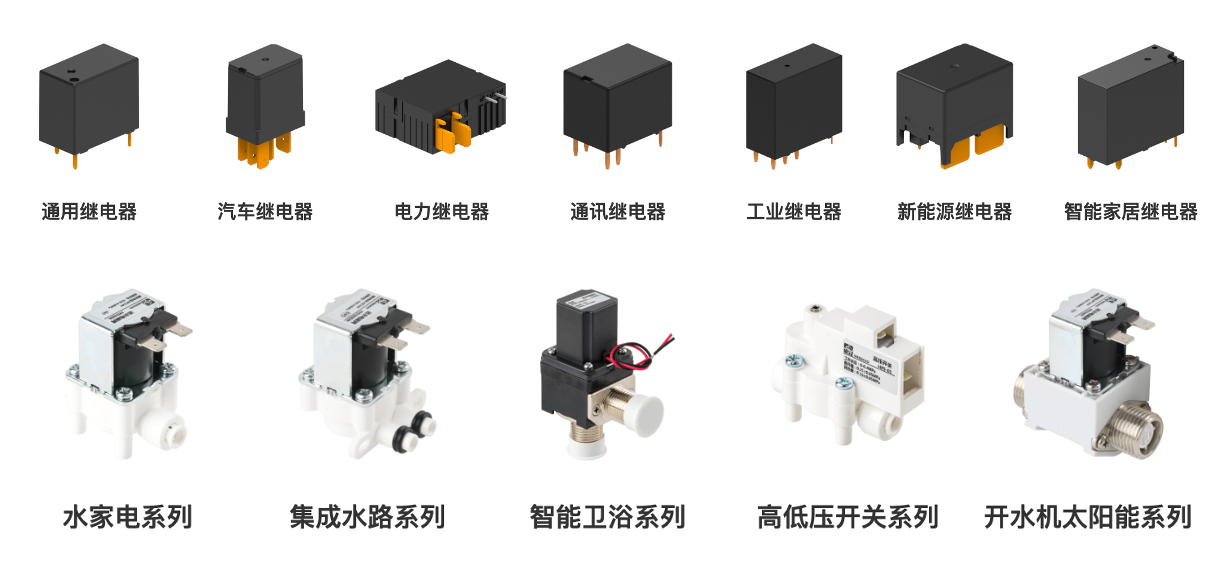
Figure 2. Meishuo's core products
After years in the industry, Meishuo continues to advance technological innovation and smart manufacturing, building a solid foundation in R&D, production processes, and quality assurance. As a national high-tech enterprise and a specialized and innovative 'Little Giant' company, it puts quality first and uses innovation to continually improve its quality management system. This supports progress in both manufacturing capability and quality management, and lays a foundation for long-term growth and customer value.
I. Project background: rethinking QMS development through quality improvement
Over the past two years, Meishuo has continued to optimize business processes and improve quality, aiming to strengthen its quality management system in preparation for joining Huawei's supply chain. It invited consultants to help design the improvement plan and, in the process, clarified its higher expectations for QMS capabilities.
Previously, Meishuo mainly archived inspection data on paper. For later statistics, staff manually entered the information into Feishu multidimensional tables. An extra collation step stood between data generated at the inspection site and subsequent analysis. It added work and made it harder to accumulate and use quality data over time.
At the same time, increasingly detailed quality-system requirements meant the company needed more than inspection records: it also needed clearer data traceability and explanations, plus effective support for audits.
These issues pointed to one central need. Quality management could not stop at digitalizing a single activity; it needed a collaborative mechanism spanning quality planning, process control, inspection execution, and problem improvement.
With this goal, Meishuo launched the QMS project to standardize quality workflows, structure quality data, and strengthen collaboration across departments and systems on one platform.
II. Project challenges: aligning system logic with actual operations
A QMS project spans many business activities and detailed professional requirements. Its effectiveness depends not only on having complete features, but also on understanding product characteristics, process structures, and the company's actual quality rules.
For Meishuo, LinkedData faced challenges specific to quality planning in the electrical industry as well as coordinating data logic across R&D, process engineering, and quality functions.
1. Carry quality requirements through each stage, starting from product characteristics
Quality control for electrical products must reflect product characteristics and real operating conditions. Some electrical parameters vary with power and voltage, and the corresponding requirements must be represented appropriately in quality planning and inspection.
This called for more detailed control and inspection plans. How could the system preserve the company's existing way of organizing documents while accounting for different parameter conditions and inspection requirements, without drifting away from actual work?
The team therefore had to review and adapt the relevant business logic to Meishuo's products and management rules, instead of simply applying generic features.
The same thinking applied to managing special product characteristics.
Take 'contact gap' in the Meishuo project. This quality characteristic is not determined by one part alone; it also depends on the frame structure, spring shape, contact dimensions, and other factors.
Although the contact gap can be identified and recorded during design, making it effective for quality control also requires understanding how it is formed and how it relates to parts, process controls, and inspection requirements.
If quality documents are maintained separately without connecting their information, risks identified early cannot be clearly mapped to later control requirements.
The project therefore examined how design failure mode and effects analysis (DFMEA), process failure mode and effects analysis (PFMEA), control plans, and inspection requirements relate to one another. This moves quality management beyond recording separate documents toward tracing where requirements originate, how they are passed on, and how they are implemented.
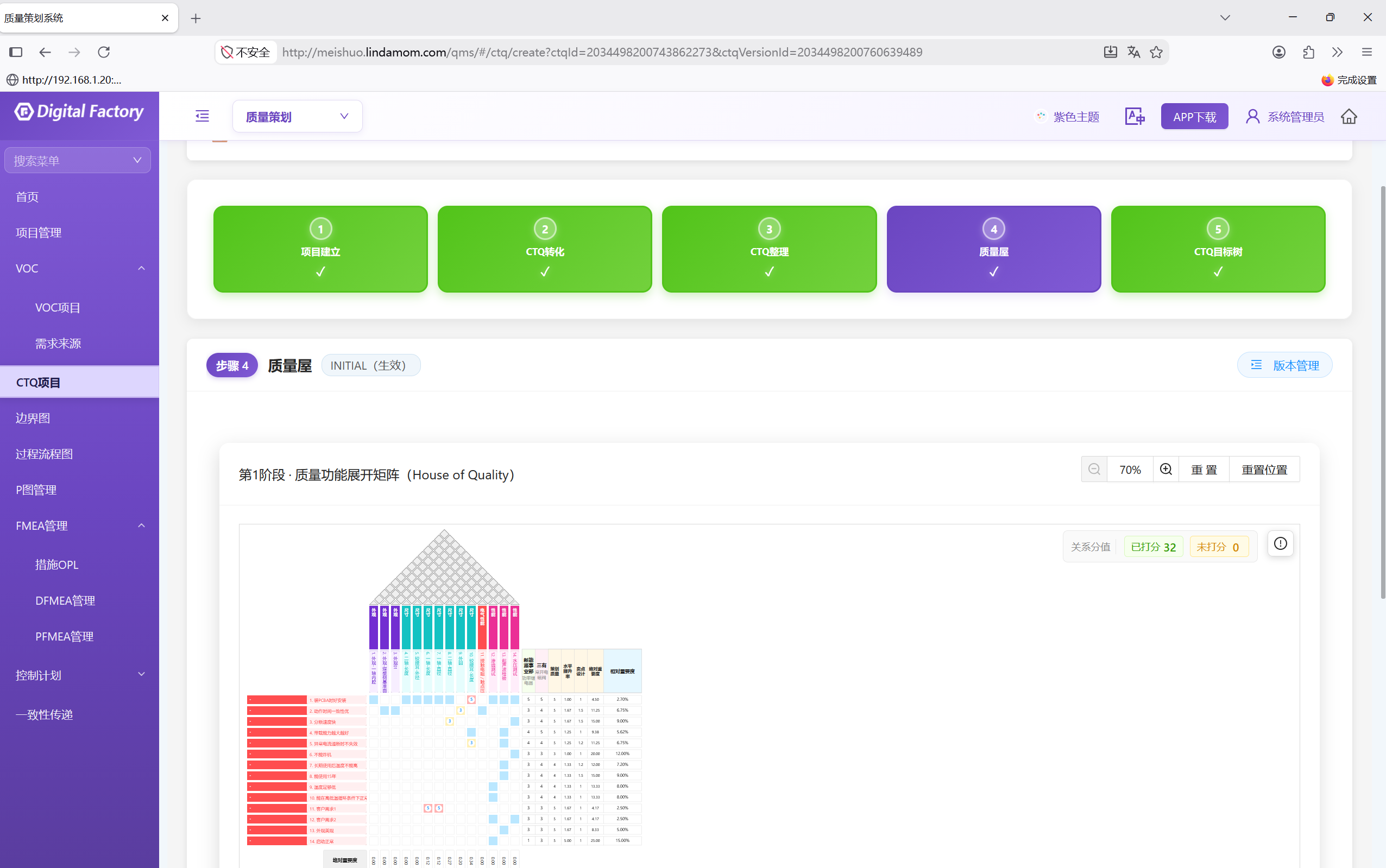
Figure 3. House of Quality in step four of the CTQ project
For LinkedData, the key was not adding a few fields. It was understanding the factors behind a quality characteristic, its risks, and its controls, then turning that business logic into data relationships and workflow rules in the system.
2. Unify R&D, process, and quality logic across thousands of operation records
If product characteristics tested the system's understanding of the industry, connecting operation data tested the project's overall planning capability.
During implementation, the team found thousands of operations in Meishuo's PLM system. But the way PLM organized those operations did not match the operation logic used in PFMEA and control plans.
This was more than a data import problem.
Operations are important business objects connecting R&D, process engineering, and quality management. When systems define or organize them differently, the links among quality planning, control requirements, and inspection execution can be affected, and quality information cannot flow smoothly through a shared business logic.
LinkedData brought together R&D, process engineering, quality, IT, and other teams for three review rounds to discuss operation logic and data relationships and progressively define a solution.
The reviews did more than resolve data connections. They also helped departments agree on how to organize operation data and apply quality requirements from their respective business perspectives.
This is easy to overlook in a complex QMS project: a system must support the connected management logic of multiple activities, not the isolated work of one department. Only after business objects, data relationships, and management rules are clarified can system functions serve real operations.
3. Move from implementing requests to co-designing solutions around the business
LinkedData's role in the Meishuo project covered not just feature development but also business analysis, solution discussions, and implementation during blueprint design.
The team did not implement every original request without question. It assessed each request against the quality management system and overall business logic. Where a request conflicted with system requirements or could weaken the overall design, LinkedData explained the reasons, discussed alternatives with Meishuo, and jointly sought a better approach.
As the collaboration deepened, Meishuo increasingly invited LinkedData into solution planning when difficult business questions arose.
The relationship evolved beyond a simple 'request and develop' handoff into deeper discussions about business goals, management rules, and system implementation.
In complex quality projects, professional value lies not only in delivering requested features. It also lies in understanding the business reasons behind requests, judging possible approaches, and helping the customer build an executable, sustainable system plan.
III. Implementation: building an end-to-end management chain from quality execution
In response to Meishuo's operations, LinkedData built QMS capabilities across quality planning, R&D quality, supplier and incoming quality, production process quality, audits, management reviews, quality dashboards, and interfaces with ERP, PLM, WMS, OA, and other systems.
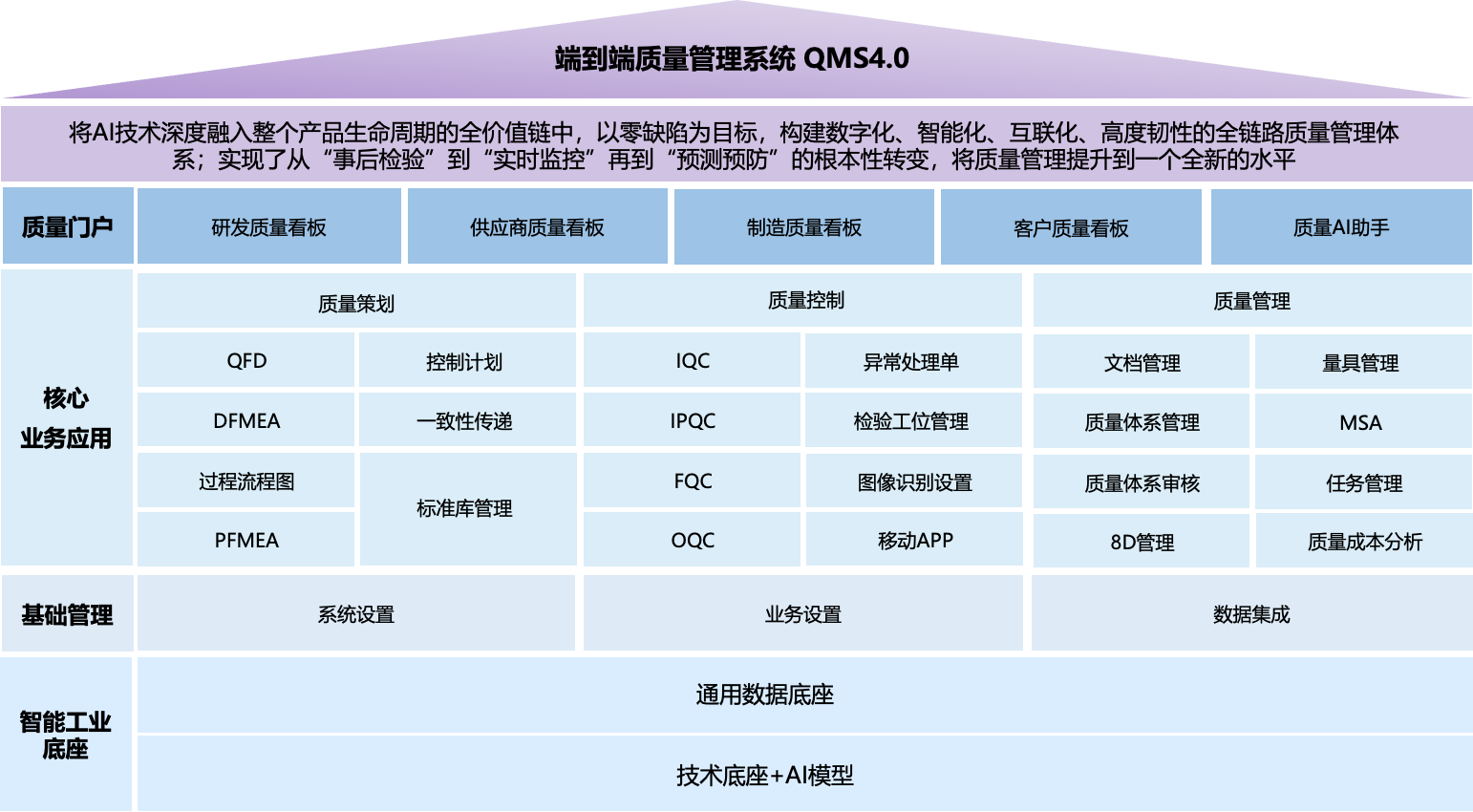
Figure 4. Functional architecture of the end-to-end quality management system
The work focused on three areas.
1. Make inspection work usable first
Inspection data management was one of Meishuo's most immediate needs at the start of the project.
The project built IQC (incoming quality inspection), IPQC (in-process quality inspection), and FQC (finished-product quality inspection) modules. It also covered quality tools such as control plans, measurement system analysis (MSA), and statistical process control (SPC).
Bringing these activities into the system creates digital records during execution and a more unified data foundation for later queries, statistics, and traceability.

Figure 5. IQC material inspection progress table
IQC was among the first and most intensively implemented modules. The team developed and deployed its functions around actual incoming inspection requirements, making it a particularly strong part of Meishuo's QMS application.
From a project perspective, responding first to real daily needs and making the system useful in specific scenarios is a key step in quality digitalization. Only when execution continuously generates business data can later analysis, traceability, and cross-stage links rest on reliable foundations.
2. Establish standardized quality workflows
Across supplier quality, production process quality, outgoing inspection, after-sales quality, quality systems, metrology management, and quality cost, the project reviewed workflows, responsibilities, approval rules, and recordkeeping in line with Meishuo's management requirements.
For example, for customer complaints and problem improvement, the system organizes information around the 8D problem-solving process. It standardizes problem descriptions, root-cause analysis, corrective actions, and improvement verification while accounting for different levels of detail in internal management and external reports.
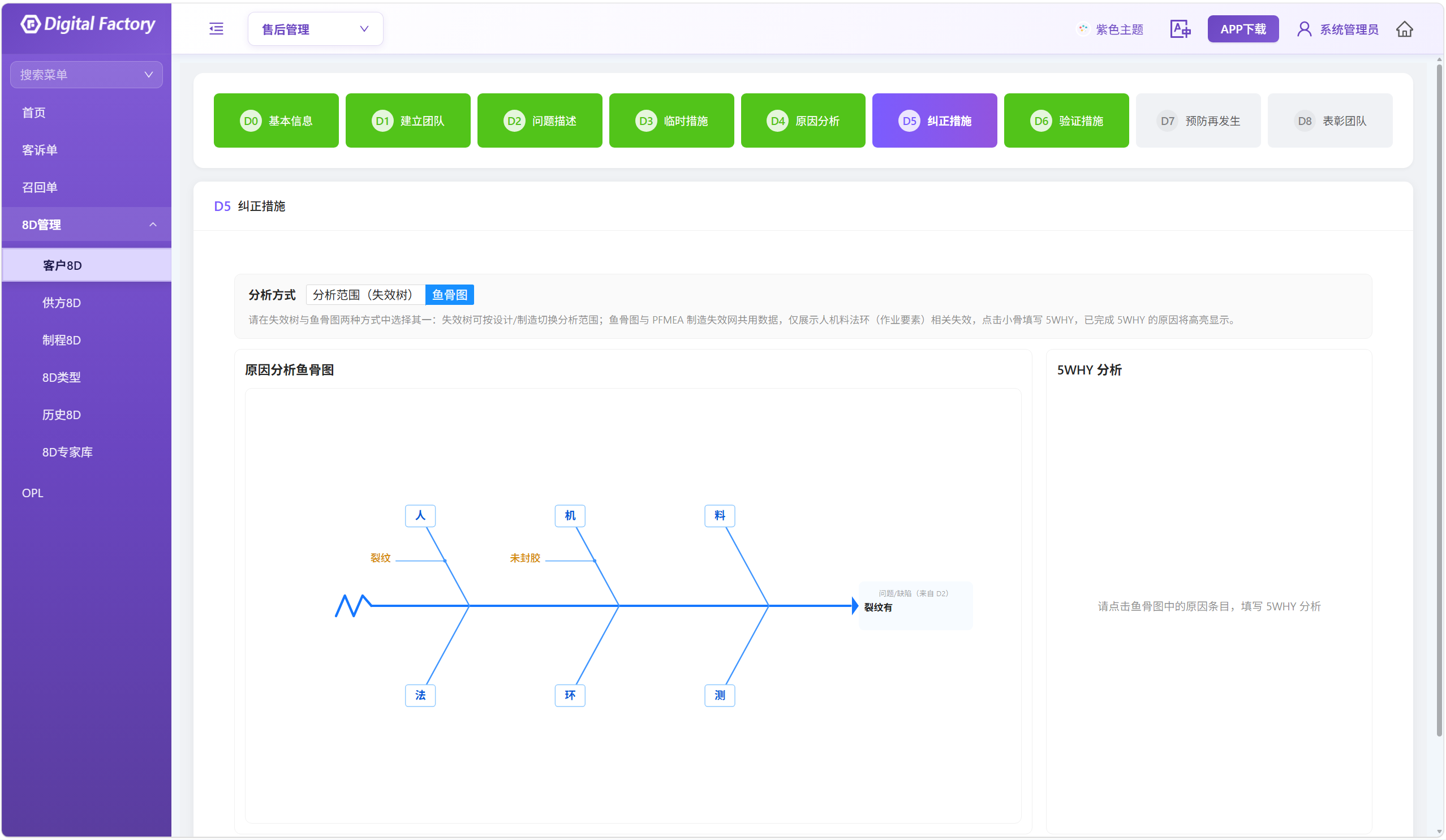
Figure 6. Fishbone diagram for customer 8D-D5
Inspection workflows likewise have to reflect different inspection types, triggers, decision rules, and exception handling, reducing reliance on scattered records and manual coordination.
By detailing these rules, the system moves beyond hosting forms to standardizing and supporting quality management processes.
3. Connect quality work with existing information systems
Quality management in manufacturing does not run alone. Inspection tasks, material information, production processes, approvals, and quality costs often reside in different business systems.
The project therefore reviewed interfaces and workflow handoffs for ERP, PLM, WMS, OA, and related systems in Meishuo's existing IT environment.
For some quality exceptions, QMS must connect to OA approvals and write back results under business rules. After a quality issue is closed, related failure analyses, control plans, and work instructions may also need updating.
This coordination keeps quality information moving through related activities, reduces gaps between systems, and supports future traceability and analysis.
IV. Full launch and continued use: from system delivery to customer recognition
For a QMS covering many business areas, success cannot be judged only by whether features are complete. The system must support real work, continuously produce data, and earn the confidence of user departments.
LinkedData implemented multiple modules around Meishuo's actual quality management needs. All project modules are now live.
As use expanded, the covered activities kept accumulating operational data, and QMS became an important digital foundation for quality management across Meishuo. According to the customer, the core processes have accumulated about six months of operating data, and application results continue to emerge in daily work.
IQC incoming quality inspection has been especially effective. Continued use has generated real operational data, and the module received favorable feedback during customer acceptance and related audits. Notably, according to the customer, nonconformities involving the IQC module were virtually absent in those audits.
Recognition extended beyond one module. Meishuo's participating departments rated the overall project highly and repeatedly invited people from other companies to visit and exchange experiences.
From full launch and sustained use across business areas to customer recognition and external visits, the Meishuo QMS project is gradually demonstrating the value of its overall design.
V. Project value: from less manual collation to a foundation for continuous improvement
The value of Meishuo's QMS project lies both in improvements to current operations and in the foundation it creates for deeper quality digitalization.
1. Move inspection data from scattered records into one system
Before the project, inspection data was mainly kept on paper, with later statistics manually entered into Feishu multidimensional tables. Collecting data and preparing statistics took place in separate steps, adding to daily workloads.
Digital inspection workflows now record data within the system, providing a more consistent basis for queries, traceability, and subsequent statistics.
According to the customer, each inspection execution operation takes about six minutes less, corresponding to an efficiency improvement of roughly 20%.
2. Create one system foundation for multiple quality activities
Building and using modules on a unified QMS platform gives the company a basis for centralized quality information, standardized workflows, and traceability across stages.
This overall approach helps quality digitalization move beyond improving one module and creates the conditions to connect different quality activities.
3. Prepare for end-to-end traceability and further analysis
The project planned the relationships among DFMEA, PFMEA, control plans, inspection plans, and inspection execution, with the control plan–inspection plan–inspection execution chain as a key business path.
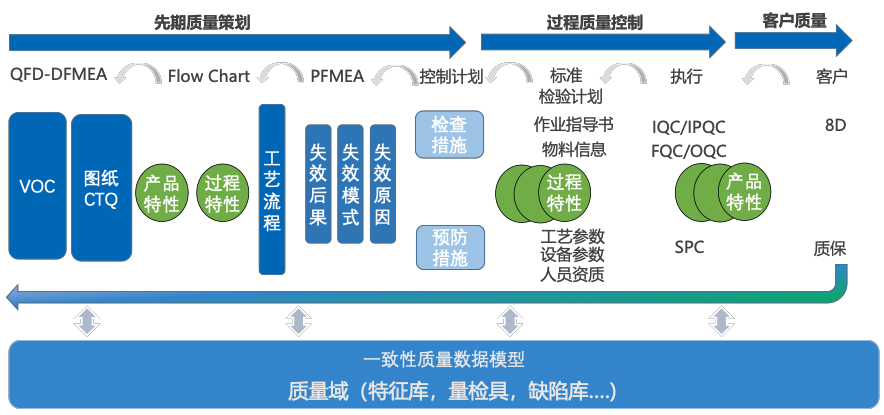
Figure 7. Business architecture of the end-to-end quality management system
Clarifying relationships among quality requirements, business objects, and execution records lays a foundation for later traceability, problem reviews, and continuous improvement.
VI. Why LinkedData: turning quality logic into a deployable system plan
The Meishuo project shows a defining feature of LinkedData's quality digitalization work: it treats QMS as more than a collection of software functions, starting from real quality operations and considering business rules, data relationships, and implementation together.
First, understand industry characteristics and operational details. Managing electrical parameters, contact gaps, and other quality characteristics requires analysis based on product characteristics and control requirements so system design stays grounded in real scenarios.
Second, solve complex cross-department and cross-system issues. Faced with thousands of operation records and different logic across quality documents, LinkedData held three review rounds with R&D, process engineering, quality, and IT. This clarified business logic and laid the groundwork for system links and data transfer.
Third, combine quality-system expertise with digital implementation. During blueprint design and feature implementation, LinkedData considered not only requested functions but also the management system and overall business logic, helping Meishuo agree on a more practical and executable path.
Fourth, focus on overall delivery and actual use. The project spans multiple quality areas; all modules are live, and core modules such as IQC remain in use and have received favorable feedback. This demonstrates LinkedData's ability to turn overall plans into work in specific scenarios.
Manufacturers planning a QMS should compare more than feature counts when selecting a partner. They should also ask whether a supplier understands quality scenarios, can handle complex cross-department and cross-system issues, and can turn business plans into sustainable system capabilities.
The Meishuo project is one example of that approach.
Conclusion: deepen long-term collaboration toward intelligent quality management
From process optimization and quality improvement to solving inspection data collation and traceability issues and building a system across planning, process control, and execution, Meishuo's QMS project shows how manufacturing quality digitalization can grow from specific needs into an integrated system.
As QMS continues to serve more quality activities, LinkedData and Meishuo will build on the results to connect quality processes and data more deeply. They will explore AI for using quality knowledge, spotting exceptions, analyzing causes, and supporting improvement decisions, moving from digital workflows and traceable data toward more intelligent analysis, judgment, and decision support.
Deepening quality practice through long-term collaboration and unlocking the value of quality data with AI, LinkedData looks forward to continuing its work with Meishuo so technology genuinely supports quality improvement and business growth.